For years, the identity verification playbook followed a reassuringly simple script. A customer applies for an account. Documents are checked. A face is matched. A sanctions list is screened. A Know Your Customer (KYC) process is completed. Done.
In a more predictable era, this was enough. Identity was treated as a fixed attribute, something verified once, filed away, and assumed to remain true indefinitely. The onboarding check was both the starting gate and the finish line.
But the finish line has moved. And most organisations have not moved with it.
Why Traditional KYC Fails in Today’s Threat Landscape
The digital threat landscape of 2026 bears little resemblance to the one that shaped today’s KYC frameworks. Three forces in particular have fundamentally disrupted the logic of point-in-time verification.
First, AI-powered fraud has scaled at a pace few anticipated. Synthetic identities constructed by blending real and fabricated data can now pass document checks with alarming reliability. Deepfake technology has evolved to defeat facial recognition models trained on yesterday’s attack vectors. What once required a criminal network and significant resources can now be executed by a single actor with a laptop and a free AI tool.
Second, account takeover (ATO) has become one of the fastest-growing fraud vectors. A customer who passed every onboarding check with flying colours can have their account compromised weeks later through phishing, credential stuffing, or SIM swapping. The verification was accurate. The threat came after it. As attack methods grow more sophisticated and more accessible, the window between a successful onboarding check and a successful account compromise continues to narrow.
Third, the very nature of digital customer relationships has changed. Customers interact with their financial institutions across dozens of touchpoints: on mobile, on web, on third-party platforms. Each interaction is a potential risk moment. Verifying once at the start of that journey and then assuming permanence is not a security model. It is a vulnerability.
The Growing Regulatory Pressure on Identity Verification Compliance
It is not only the threat landscape that has shifted. The regulatory environment is evolving in lockstep, and regulators are increasingly explicit about their expectations.
The upcoming Anti-Money Laundering Regulation (AMLR), PSD3, and eIDAS 2.0 are raising the bar on assurance, oversight, and accountability across the board. These frameworks reflect a growing recognition that static, point-in-time controls are insufficient for the dynamic nature of modern financial crime. Regulators want evidence not just that a customer was verified, but that their risk profile is actively monitored and re-evaluated over time.
Critically, AMLR introduces direct applicability across EU member states, removing the inconsistencies that previously allowed some institutions to operate under lighter national interpretations of AML rules. PSD3, meanwhile, places renewed emphasis on strong customer authentication and fraud liability, making continuous verification not just a best practice but an emerging legal expectation. eIDAS 2.0 further reinforces this direction by establishing a framework for reusable, high-assurance digital identities that go far beyond a one-time document check.
For many institutions, this creates a compliance gap they may not yet fully appreciate. Passing a KYC audit today does not guarantee regulatory adequacy tomorrow.
The Key Limitation of One-Time KYC Verification
The fundamental limitation of traditional KYC is that a one-time check can only ever prove one thing: that someone looked legitimate and genuine at a single point in time.
It cannot confirm that the same person is behind the screen today. It cannot detect risk that developed after onboarding. It cannot flag the low-risk account that quietly became high-risk as circumstances changed. And it cannot distinguish between a genuine customer and a fraudster who has since taken control of their identity.
Consider a concrete example: a customer verified through a standard KYC process in January may, by March, have become the victim of a credential theft they are not even aware of. Their account is now controlled by a fraudster, yet from the institution’s perspective, the customer remains fully verified. The KYC check passed. The risk is invisible.
This is not a flaw in implementation. It is a structural limitation of the model itself.
The Question That Now Defines Identity Verification Strategy
Financial institutions and digital businesses are beginning to confront an uncomfortable truth: the question they have been trained to ask, “Do we know this customer?”, is no longer the right question.
The question that matters in today’s environment is fundamentally different: “Can we still trust this customer, right now?”
That single shift in framing has profound implications. It means that identity verification cannot be a moment. It must be a posture, one maintained and re-evaluated continuously across the full customer lifecycle. It requires systems capable of detecting behavioural anomalies, flagging step-up authentication needs, and reassessing risk in real time, not just at the point of onboarding.
For many organisations, this demands not just a change in tooling, but a change in mindset. Compliance teams, fraud teams, and product teams need to align around a shared understanding: that identity is not a fixed fact, but a living signal.
A New Standard Is Emerging: Beyond KYC
KYC is not going away. Regulators require it, risk teams depend on it, and every serious digital business needs a reliable way to verify who is on the other side of the screen. It remains the essential starting point.
But it is no longer the finish line.
The organisations that will lead in the next era of digital identity are those that recognise this shift and act on it. The answer to the limitations of KYC is not more of the same. It is a fundamentally different approach to trust: one that is continuous, dynamic, and built for the world as it actually is.
Early adopters of this approach are already seeing measurable results, including reduced fraud loss rates, improved regulatory audit outcomes, and stronger customer trust scores. The competitive and compliance case for moving beyond point-in-time verification has never been clearer.
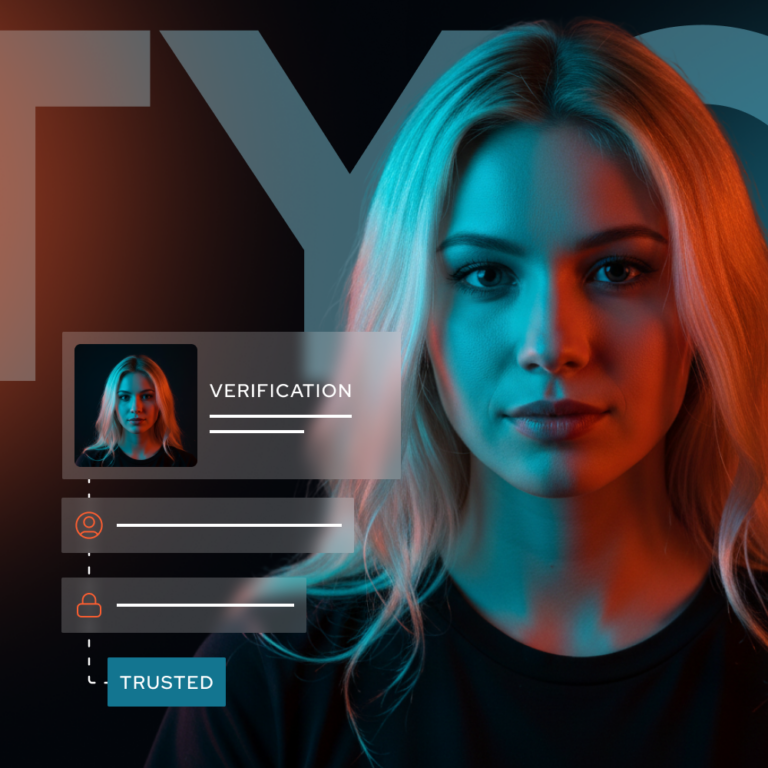
That approach has a name. We explore it in our next article: From KYC to TYC: What Changes, and Why It Matters.
By

Mallaury Marie
Campaign Manager at IDnow
Connect with Mallaury on LinkedIn