

The IDnow Blog: Ideas That Build Trust.
Explore expert commentary, practical perspectives and forward-looking ideas from across the world of identity verification, fraud prevention and compliance. From AI-powered attacks to regulatory reforms like eIDAS 2.0 and PSD3, the IDnow blog is your hub for understanding what’s happening and what’s next.
Latest Blogs.

QEAA for AMLR: The Missing Facts in Financial Services Onboarding
Financial institutions have become good at answering one question: is this person who they claim to be? Now, AMLR requires them to ask further questions — and QEAA may hold the answer.

Lessons From… Why ETSI, AMLR and eIDAS 2.0 Standards are Your Competitive Advantage
Most businesses treat standards compliance as a cost. Sebastian Elfors, Chief Security Officer at IDnow Trust Services and active contributor to ETSI and CEN working groups, […]

The Identity Gap: One Size Fits None. Why the EUDI Wallet Won’t Please Everyone…
24% of European consumers still prefer branch-based onboarding, while 16% won’t open a bank account online at all. Here’s why a successful EUDI Wallet integration […]

The Identity Gap: Privacy vs Compliance. Why Selective Disclosure Is the EUDI Wallet’s Most Powerful Feature
63% of consumers say they’re more likely to use the EUDI Wallet because of selective disclosure. Here’s why that number is really […]

The Identity Gap: Friction Vs Conversion. What the EUDI Wallet Will and Won’t Fix Tomorrow
IDnow’s EUDI Wallet Consumer Survey reveals almost half of French and German consumers have abandoned transactions because identity verification was too difficult. Nearly half (46%) of […]
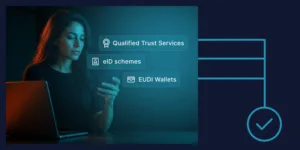
How IDnow manages every AMLR identity verification method on one platform
IDnow runs every AMLR-recognised identity verification method behind one integration and takes the operational load off your team. Qualified Trust […]

How IDnow delivers QTSP status, ETSI 119 461 certification, and eIDAS compliance in a single qualified IDV platform
How does IDnow prove it meets the AMLR compliance and certification bar for qualified identity verification? IDnow holds Qualified Trust […]

Approved in Seconds, Funded in 2 Days: How Teylor is Rewriting SME Lending.
Discover how Teylor uses IDnow video identification and instant reverification to deliver compliant SME financing.
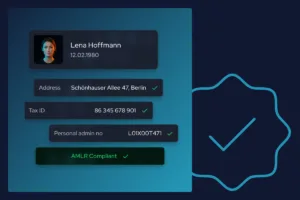
IDnow Develops QEAA to Close the AMLR Attribute Gap.
AMLR requires regulated institutions to verify more than identity. IDnow’s QEAA offering will give regulated organisations a qualified way to verify the customer attributes they need.

The true face of fraud #6: 3 ways to fight it in 2026.
Deepfake fraud has surged more than 2,000% in just three years. Criminal networks now operate billion-dollar fraud ecosystems using AI, […]
The Credential Is the New Passport.
A quiet revolution is rewriting the rules of digital trust, and this time, proving something once could make it reusable. Digital identity […]

ETSI TS 119 461 certification is now the dividing line for compliant remote onboarding
There’s a quiet sorting happening in identity right now, and the certification behind your remote onboarding decides which side of […]